

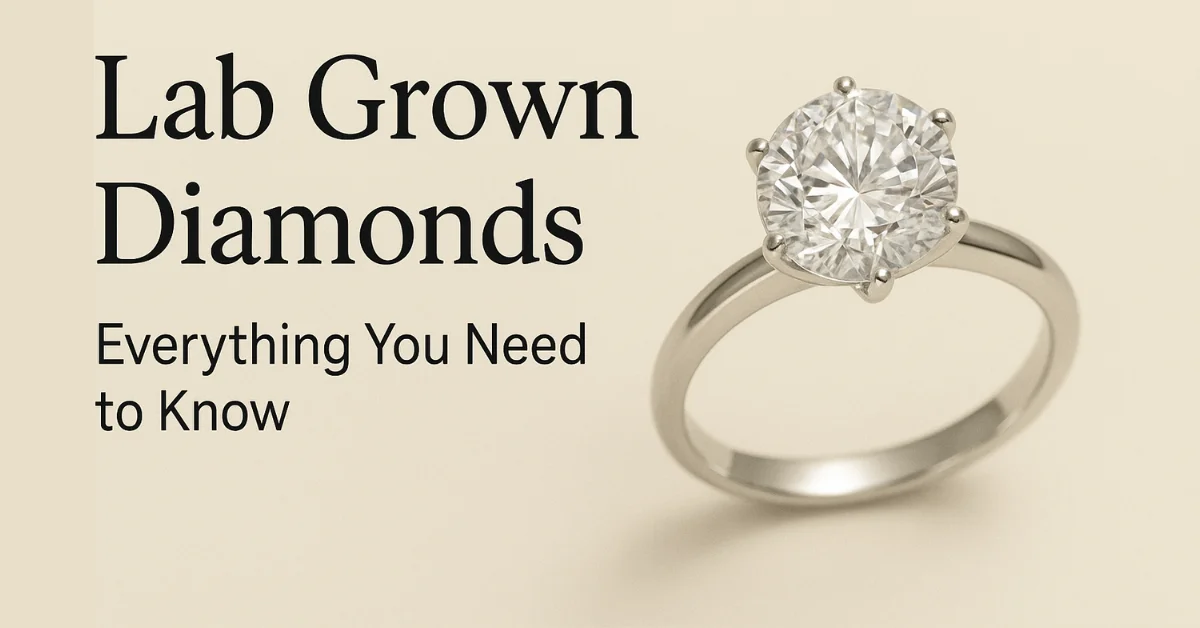
Introduction: Why Lab Grown Diamonds Matter Today
When people shop for an engagement ring or fine jewelry, they often face a big choice. Should they buy a natural diamond or a lab grown diamond? The answer is not only about cost. It is also about ethics, sustainability, and personal values.
Lab grown diamonds are becoming a global choice for couples who want beauty, brilliance, and responsibility without spending more than they need to. In this guide, you will learn what they are, how they compare to natural diamonds, and how to choose the perfect one for your engagement ring or jewelry.
Table of Contents
What Are Lab Grown Diamonds
A lab grown diamond is a real diamond created in a laboratory using advanced technology that copies the natural conditions in which diamonds form under the earth.
These diamonds have the same chemical, physical, and optical properties as natural diamonds. In short, they are not fake. They are genuine diamonds, just grown above ground instead of mined.
Quick answers to common questions:
- Are lab grown diamonds real? Yes. They are identical to natural diamonds in structure and brilliance.
- What does lab grown diamond mean? It means the diamond was created in a lab instead of mined from the earth.
- How long does it take to make one? It usually takes several weeks to a few months depending on the size and growth method.
According to the Gemological Institute of America (GIA), lab grown diamonds are chemically, physically, and optically the same as natural diamonds, the only difference being their origin.
How They Are Made
There are two main ways to create a lab grown diamond.
High Pressure High Temperature (HPHT): This method uses high pressure and high heat to replicate the conditions in which diamonds naturally form.
Chemical Vapor Deposition (CVD): This method grows a diamond layer by layer using carbon-rich gases in a controlled chamber.
Both methods produce real diamonds. A one carat lab grown diamond can take weeks to grow. Larger stones like three carats can take months.
Lab Grown vs Natural Diamonds
Many buyers ask how they compare with natural diamonds.
Similarities:
- Both are real diamonds with the same sparkle, hardness, and durability.
- Both can be cut, polished, and certified by trusted gem labs.
Differences:
- Price: Lab grown diamonds usually cost 40 to 60 percent less than natural diamonds of the same quality.
- Source: Natural diamonds are mined while lab grown diamonds are made above ground.
- Value: Natural diamonds tend to hold stronger resale value. Lab grown diamonds are better for buyers who care about beauty and ethics rather than investment.
Why Couples Choose These Engagement Rings
Engagement rings are the most popular use of these stones. Couples today want a stone that reflects their values as well as their love story.
Reasons couples choose lab grown engagement rings:
- Ethical sourcing. No conflict mining.
- Bigger carat size for the same budget. For example, a two carat lab grown diamond may cost similar to a one carat natural diamond.
- Trend forward. Oval shapes, halos, and solitaire settings in lab grown diamonds are gaining popularity around the world.
Popular choices include:
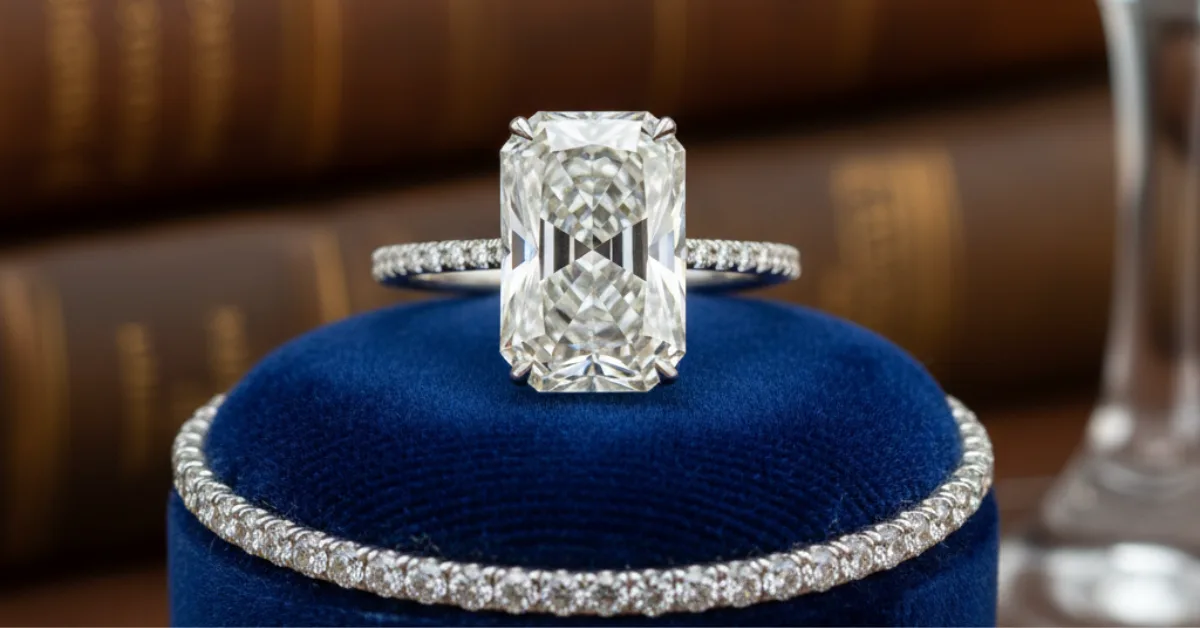
- Two carat lab grown diamond rings.
- Three carat lab grown diamond engagement rings.
- Oval lab grown diamond engagement rings.
Popular Lab Grown Diamond Jewelry Beyond Rings
Lab grown diamonds are not just for engagement rings. They are now used in many types of fine jewelry.
Earrings: Lab grown diamond earrings are classic and versatile. They are often chosen for everyday wear or special gifts.
Tennis Bracelets: A lab grown diamond tennis bracelet offers timeless luxury at a more affordable price compared to mined versions.
Fashion Jewelry: From pendants to stackable rings, lab grown diamonds are expanding the options for buyers who want sustainable sparkle.
Popular Jewelry Beyond Rings
Moissanite is another popular alternative to natural diamonds, but it is not a diamond.
Key differences:
- Composition: Lab grown diamonds are real diamonds. Moissanite is made of silicon carbide.
- Hardness: Diamonds score 10 on the Mohs scale. Moissanite scores 9.25.
- Sparkle: Moissanite has a rainbow-like brilliance while diamonds have a white sparkle.
Moissanite is usually cheaper, but it does not carry the same identity as a diamond. Buyers who want an authentic diamond should choose lab grown. Buyers who want affordability and do not mind a different look may choose moissanite.
Do They Hold Their Value
This is one of the most common questions.
Lab grown diamonds do not hold resale value as strongly as mined diamonds. The secondary market is still small. If you plan to sell later, a natural diamond may perform better.
However, most people buy diamonds for love, fashion, or heirloom purposes. In that sense, the value of a lab grown diamond is emotional, ethical, and practical. You can buy a larger or higher quality diamond at the same budget and enjoy it every day without overpaying.
How to Choose the Perfect Lab Grown Diamond Ring
Choosing one follows the same process as choosing a natural diamond.
The 4Cs:
- Cut: Determines sparkle. Always prioritize cut quality.
- Color: Lab grown diamonds come in a wide range. Near colorless is a good balance of beauty and price.
- Clarity: Look for eye-clean stones. Slight inclusions are normal.
- Carat: Popular sizes include two carat and three carat for engagement rings.
Certification: Always buy certified diamonds. IGI and GIA are the most trusted labs for grading lab grown diamonds.
Global tips: Buyers around the world should confirm return policies, warranties, and upgrade options with their jeweler.
The Future of Diamonds Is Lab Grown
These diamonds are no longer a niche. They are now part of mainstream fine jewelry across the world. They offer couples the chance to buy real stones that are ethical, affordable, and beautiful.
The future of diamond jewelry will likely see lab grown diamonds continue to grow in acceptance. For many buyers, the choice is simple. A lab grown diamond provides the same sparkle and love story without compromise.
Final Thought:
If you want to explore engagement rings in detail, read our Ultimate Engagement Ring Shopping Guide. Together with this lab grown diamond guide, you will have everything you need to choose the symbol of forever.
Frequently Asked Questions About Lab Grown Diamonds
Are lab grown diamonds real?
Yes. Lab grown diamonds are real diamonds with the same chemical, physical, and optical properties as mined diamonds.
What does lab grown diamond mean?
It means the diamond was created in a laboratory using advanced technology instead of being mined from the earth.
How long does it take to make a lab grown diamond?
It usually takes several weeks to a few months depending on the size and growth method.
Are lab grown diamonds cheaper?
Yes. Lab grown diamonds usually cost 40 to 60 percent less than natural diamonds of the same size and quality.
Do lab grown diamonds hold their value?
Lab grown diamonds have lower resale value than natural diamonds. Most people buy them for beauty, ethics, and affordability rather than investment.
Lab grown diamond vs moissanite: what is the difference?
Lab grown diamonds are real diamonds. Moissanite is a different gemstone made of silicon carbide. Moissanite sparkles differently and is less hard than a diamond.
What sizes are popular for lab grown diamond engagement rings?
Two carat and three carat lab grown diamonds are popular because buyers can afford larger stones compared to mined diamonds.
Your Voice Matters
Every diamond tells a story, and we would love to hear yours. Would you choose a lab grown diamond or a natural one for your special moments? What matters most to you when picking a ring – size, sparkle, design, or origin? Share your thoughts in the comments and join the conversation.
Final Thought:
If you want to explore engagement rings in detail, read our Ultimate Engagement Ring Shopping Guide. Together with this guide, you will have everything you need to choose the symbol of forever.

Leave a Reply