

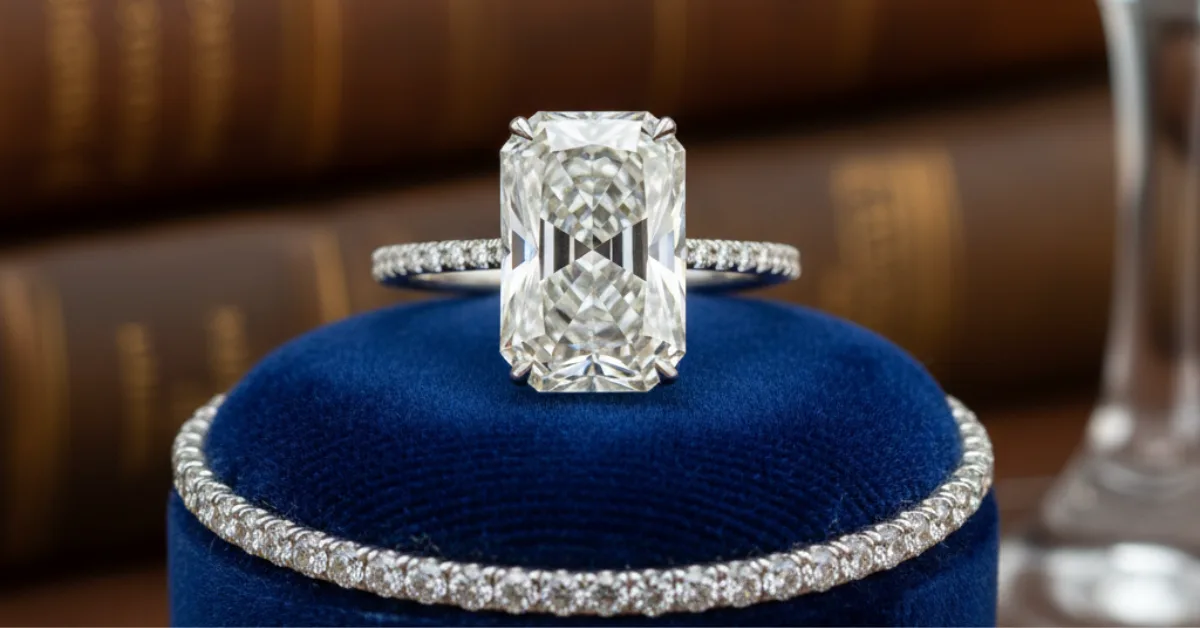
In the world of exquisite gemstones, some diamonds don’t just sparkle—they tell a story. The Ashoka cut diamond is one such gem, a masterpiece of diamond cutting that combines ancient legend with modern precision to create a truly mesmerizing stone. The ultimate choice for a luxury Ashoka cut diamond engagement ring, this patented cut is a testament to rarity and unparalleled craftsmanship.
Table of Contents
A Name Steeped in History, A Cut Born of Innovation
The name “Ashoka” itself evokes a sense of grandeur, harking back to the legendary 41.37-carat D flawless diamond named after the benevolent Indian Emperor Ashoka the Great. Legend has it that the original Ashoka possessed the power to “remove sorrow and bring joy.”
While the original stone’s fate is shrouded in mystery, its legacy inspired the William Goldberg Diamond Corporation to create a modern cut that lives up to its illustrious namesake. The modern Ashoka is a patented and proprietary diamond cut, ensuring its exclusivity and requiring rough diamonds of extraordinary size and quality—a criteria met by less than one percent of all rough diamonds mined.
The Ashoka Cut’s Core Characteristics
The Ashoka is instantly recognizable and celebrated for its superior visual effects, achieved through its unique structure:
- Shape: An elongated, rectangular silhouette with gently rounded, cropped corners. Its sleek profile is highly flattering, creating a distinct finger-lengthening effect.
- Facets: It features 62 precisely arranged facets—a significantly higher number than most elongated fancy shapes. This intricate geometry is the secret to its signature sparkle.
- Brilliance: The faceting pattern delivers superior brilliance and fire, providing a dynamic, almost prismatic sparkle that is much bolder than a classic step-cut.
- Perceived Size: Thanks to its unique proportions, the Ashoka appears visibly larger—often cited as 30% to 50% larger—than an emerald-cut diamond of the same carat weight.
The Ashoka Cut in Comparison
The Ashoka cut is a hybrid masterpiece. It is often compared to the two most popular elongated fancy shapes, but it distinguishes itself by combining the best features of both.
Ashoka Cut vs. Emerald Cut (The Step-Cut)
The Emerald cut is defined by its long, straight, parallel facets that create a sophisticated “hall-of-mirrors” effect.
- Sparkle Difference: The Emerald cut offers broad, elegant flashes of light and emphasizes crystal clarity. The Ashoka cut, by contrast, delivers an intense, fiery brilliance and dynamic, scattered sparkle.
- Visual Size: While both are elongated, the Ashoka cut is deliberately proportioned to carry more weight in its spread, making it appear substantially larger (up to 50%) than a comparable-carat Emerald cut.
Ashoka Cut vs. Radiant Cut (The Brilliant-Cut)
The Radiant cut also uses a brilliant facet pattern on a rectangular stone, giving it high sparkle and fire.
- Exclusivity: The Radiant cut is widely available from any cutter. The Ashoka cut is a patented, proprietary design owned by William Goldberg, ensuring its rarity and guaranteeing a consistent, optimal cut quality that few others can replicate.
- Refinement: The Ashoka’s unique faceting pattern creates a superior level of brilliance and perceived size that stands out even among brilliant-cut fancies, offering a more refined and visually consistent sparkle.
Worn by Legends: Celebrity Owners
The elegance, rarity, and exceptional sparkle of the Ashoka cut have made it a favorite among A-list celebrities and connoisseurs who seek a diamond that truly stands out. When you choose an Ashoka cut diamond engagement ring, you are joining an exclusive club:
- Reese Witherspoon famously wears a stunning Ashoka cut diamond engagement ring set on a delicate micropavé platinum band.
- Priyanka Chopra chose an East-West set Ashoka-cut diamond for her striking Chopard wedding band, showcasing its modern versatility.
- Angelina Jolie and Sharon Stone have both been seen wearing the distinctive cut in various high jewelry pieces, favoring its elegant silhouette and spectacular light performance.
- Benny Blanco has showcased the cut’s maximalist appeal in men’s high jewelry, wearing a timepiece and bracelet featuring multiple Ashoka diamonds on his wedding day.
The Ashoka cut diamond is a statement of individuality, a celebration of masterful craftsmanship, and an heirloom in the making. It is the ideal choice for those who desire the elongated shape of a step-cut but demand the breathtaking fire and brilliance of a round diamond.
Frequently Asked Questions (FAQ) About the Ashoka® Cut Diamond
The Ashoka is a legendary cut, and its rarity often leads to specific questions. Here, we address the most common inquiries real people have when considering this exclusive diamond.
Is the Ashoka cut a real, official diamond cut like the Round Brilliant or Princess cut?
The Ashoka is a patented and trademarked proprietary cut exclusively owned by the William Goldberg Diamond Corporation. It is a real and highly specific cut, but unlike generic shapes, it cannot be legally cut by just any diamond cutter. This exclusivity is what guarantees its rarity, consistency, and premium quality, setting it apart from non-patented fancy shapes.
Why does the Ashoka cut look so much bigger than other diamonds of the same carat weight?
This is one of the cut’s most famous features! The Ashoka is engineered with a unique set of proportions and its carat weight is carried in its elongated shape and large table (top surface). It often appears 30% to 50% larger in its surface area than an Emerald cut diamond of the exact same carat weight. This maximized spread gives you maximum visual impact.
How does the Ashoka cut compare to the Radiant cut or Criss-cut?
All three are elongated, brilliant-style cuts, but they are not the same:
Ashoka Cut: Patented, features 62 precise facets, has a unique rectangular outline with softly rounded corners, and is guaranteed to be cut to the highest, most consistent standards.
Radiant Cut: A generic, non-patented brilliant rectangular cut, whose proportions and faceting can vary wildly between cutters.
Criss-Cut: This is a term often used for a specific faceting pattern that resembles the Ashoka or Radiant cut’s ‘criss-cross’ facet design, but it is typically a more affordable, non-proprietary alternative to the exclusive Ashoka.
Are there any downsides to choosing an Ashoka cut diamond?
The main ‘downside’ is cost and availability.
Premium Price: Due to the proprietary nature, the skill required to cut it (often taking up to six months), and the fact that it requires rare, high-quality rough material, the Ashoka cut commands a significant price premium over non-patented cuts of similar size and quality.
Limited Availability: It can only be purchased through William Goldberg or its authorized partners, making it much harder to find than a standard Round or Princess cut diamond.
What kind of setting is best for an Ashoka cut engagement ring?
The beauty of the Ashoka is its versatility:
Solitaire: A simple four-prong or bezel setting is classic and allows the diamond’s unique shape and brilliance to take center stage.
Three-Stone: Pairing it with two smaller side stones (like bullets, trapezoids, or even Round brilliants) beautifully highlights its elongated profile.
East-West: Setting the stone horizontally across the finger is a highly modern and trending choice that further emphasizes its unique shape and finger-flattering look (as seen on Priyanka Chopra’s wedding band).
What part of the diamond’s look do you find the most captivating – the shape, the way it catches the light, or its exclusive rarity?
Leave a Reply